
Arabic is a rich, beautifully structured language, and one of the first real challenges kids face while learning to read and write is understanding how letters connect to each other. Parents and teachers often ask for a simple way to explain Arabic Non-Connecting Letters for Kids, so here’s a clear, practical guide to make the concept click.
What are non-connecting letters?
Most Arabic letters happily link to the letter before and after them. But six letters are different — they only connect to what comes before them, never to what follows: Alif (ا), Daal (د), Dhaal (ذ), Raa (ر), Zay (ز), and Waw (و). Mastering these six eliminates the vast majority of early spelling mistakes, since kids naturally tend to over-generalize the “letters connect” rule to every single letter.
A story that makes Arabic Non-Connecting Letters for Kids stick
Picture these six letters as mischievous kids playing rough in a garden — until a tiny thorn pricks their left hand. From then on, they only hold hands using their right hand (connecting backward), while their left hand (connecting forward) stays tucked away, refusing every letter that tries to link up after them. That’s why they’re nicknamed the “naughty letters” — they push away whatever comes next.
Examples kids can practice with
- Alif: بَاب (baab) — connects to the Baa before it, pushes away what follows
- Daal: مَدْرَسَة (school) — connects backward, breaks the chain forward
- Raa: كُرْسِي (chair) — same pattern, every time
A simple 4-day practice plan
- Day 1: Tell the story, write the six letters big, and set them to a simple rhyme
- Day 2: Sensory practice — have kids trace words in sand, leaving a visible gap after each non-connecting letter
- Day 3: Color-coding — non-connecting letters in red, everything else in blue
- Day 4: Build words from scattered letters, applying the rule directly
Why Arabic Non-Connecting Letters for Kids matters?
A child’s instinct to generalize rules is natural — and powerful once directed correctly. Teaching these six letters explicitly, through story and repetition rather than dry recitation, builds genuine spelling confidence fast, typically within three to four weeks of consistent practice.
A few quick answers
Best started around ages 4.5–6, right after a child knows the alphabet and short vowels. Playful nicknames like “naughty letters” don’t undermine learning — they’re simply replaced by the formal term later in school. If a child recites the rule perfectly but still miswrites it, that signals a need for hands-on, motor-memory practice rather than more verbal repetition.
Patience, play, and color are a parent’s best tools here — and mastering these six letters sets a rock-solid foundation for everything that follows.
Images from Arabic Non-Connecting Letters for Kids
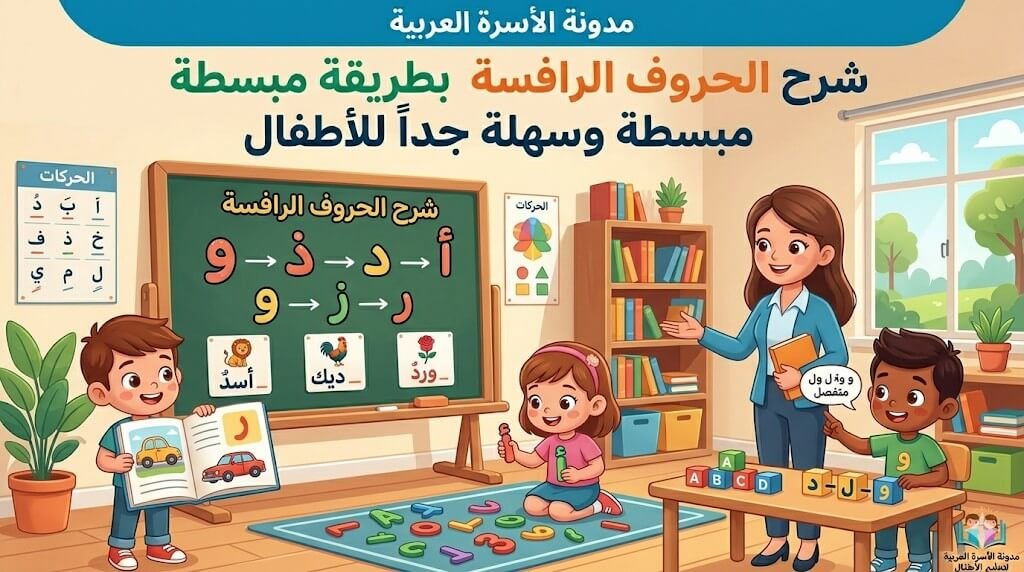
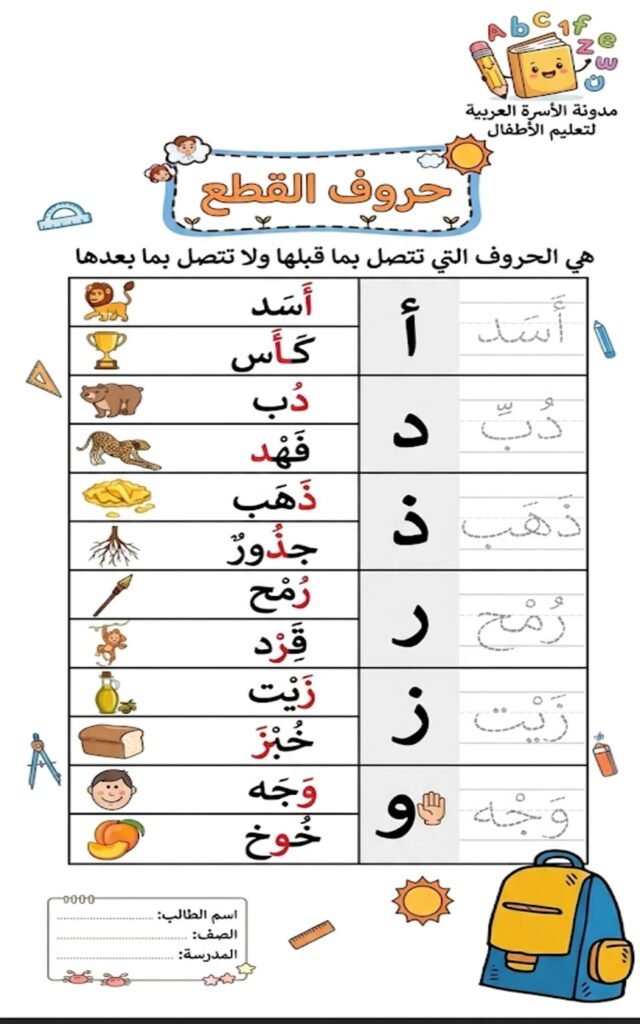
Arabic Non-Connecting Letters for Kids – Simple Guide & Examples
For easy, free direct downloading, the memorandum was also displayed in PDF format. We presented this file to you from the kidslearningarabic blog If it indicated that there was an error. I hope you will leave that in the comments below.
Read also in Arabic: Arabic Non-Connecting Letters for Kids – Simple Guide & Examples