
Arabic letter forms coloring worksheets for kindergarten provide young learners with a vibrant, tactile bridge into the world of cursive script. While discovering standalone letters marks an exciting milestone, early readers often feel puzzled when characters stretch their arms or transform their bodies inside words. By coloring large, hollow outlines of letters in their isolated, initial, medial, and final forms, preschool and kindergarten learners internalize cursive anatomy naturally. This low-pressure, artistic approach builds fine-motor control, clarifies visual changes, and eliminates cursive anxiety before formal penmanship begins.
Connecting creative art with positional shape recognition makes Arabic cursive intuitive to master. Here is why structured coloring sheets form the ideal foundation for early reading readiness.
Why Choose Arabic Letter Forms Coloring Worksheets for Kindergarten?
Practicing regularly with Arabic letter forms coloring worksheets for kindergarten delivers clear developmental advantages:
- Demystifies Positional Variations: Visual side-by-side coloring boxes show exactly how letters change appearance at the beginning, middle, and end of words.
- Builds Fine-Motor Coordination: Filling large, bold contours develops wrist stability, precise grip, and boundary awareness without pencil fatigue.
- Reinforces Connecting Rules: Highlights non-connecting “stubborn” letters versus friendly dual-connecting characters through clear visual layouts.
- Strengthens Visual Memory: Associates distinct color themes with different positions, helping emerging readers spot joined letters instantly in storybooks.
Inside This Kindergarten Practice Pack
Designed thoughtfully to balance playful discovery with structured foundational benchmarks, this printable booklet delivers high-impact support:
- Multi-Position Character Outlines: Generous hollow letters illustrating each alphabet character across its four primary states: isolated, initial, medial, and final.
- Child-Friendly Vocabulary Illustrations: High-contrast coloring artwork featuring familiar objects and animals that showcase the target letter in action.
- Clear Baseline Positioning Guides: Horizontal guide lines showing how characters rest, stretch along the rails, or dip beneath the floor.
- Ready-to-Print Monochrome PDF: A zero-prep, ink-conscious layout engineered for household printers, preschool morning baskets, or kindergarten art corners.
Practical Home Tips for Letter Shape Success
To make coloring practice a cheerful, engaging table routine with your learner, try these creative parent tips:
- The Traffic Light Color Code: Use green crayon for the initial form (ready to go!), yellow for the medial form (in the middle!), and red for the final form (stop!).
- The “Spot the Arm” Game: Point out how the letter stretches its “friendly arm” along the baseline to hold hands with neighboring letters.
- Crayon and Finger-Trace Combo: Have your child color the inside of the letter, then trace along its outer edges with their finger while sounding out its phonetic voice.
Images from Arabic Letter Forms Coloring Worksheets for Kindergarten
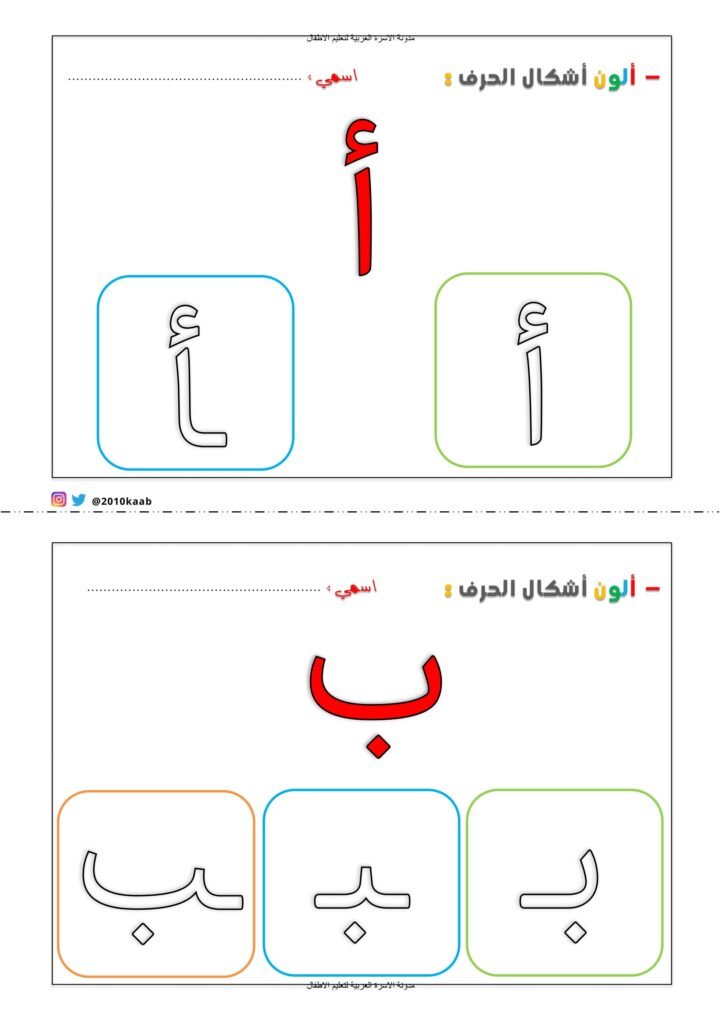
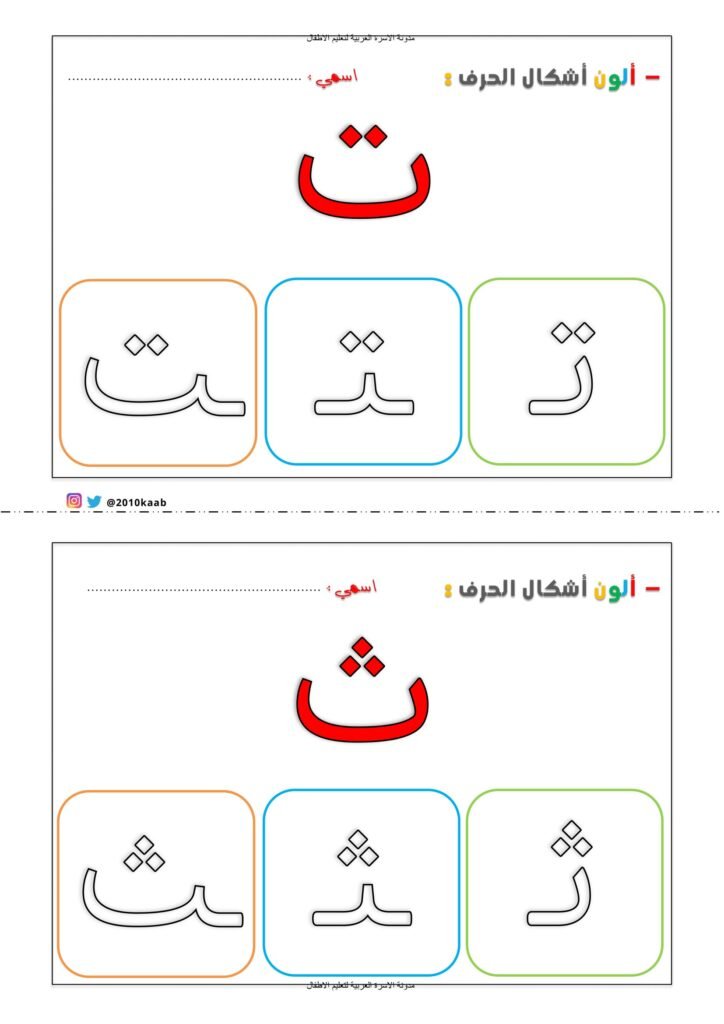
Arabic Letter Forms Coloring Worksheets for Kindergarten: The Cursive Shapes Guide
For easy, free direct downloading, the memorandum was also displayed in PDF format. We presented this file to you from the kidslearningarabic blog If it indicated that there was an error. I hope you will leave that in the comments below.
Read also in Arabic: Arabic Letter Forms Coloring Worksheets for Kindergarten: The Cursive Shapes Guide