
Arabic alphabet worksheets for kids provide an essential, multi-sensory bridge linking early letter-symbol recognition with sound discrimination and word context. Simply memorizing the names of letters in isolation leaves early readers unprepared for the flexible cursive nature of Arabic script. This 15-page printable activity pack focuses methodically on the first nine letters of the alphabet: Alif (أ), Baa (ب), Taa (ت), Thaa (ث), Jeem (ج), Haa (ح), Khaa (خ), Daal (د), and Dhal (ذ). For young kids, practicing with these dynamic sheets turns abstract consonants into engaging coloring, auditory listening puzzles, and hands-on word-completion challenges.
Connecting artistic coloring with targeted phonemic exercises makes early decoding intuitive and rewarding. Here is why structured alphabet worksheets form the ideal foundation for early Arabic literacy.
Why Choose Arabic Alphabet Worksheets for Kids?
Practicing regularly with Arabic alphabet worksheets for kids delivers distinct developmental advantages:
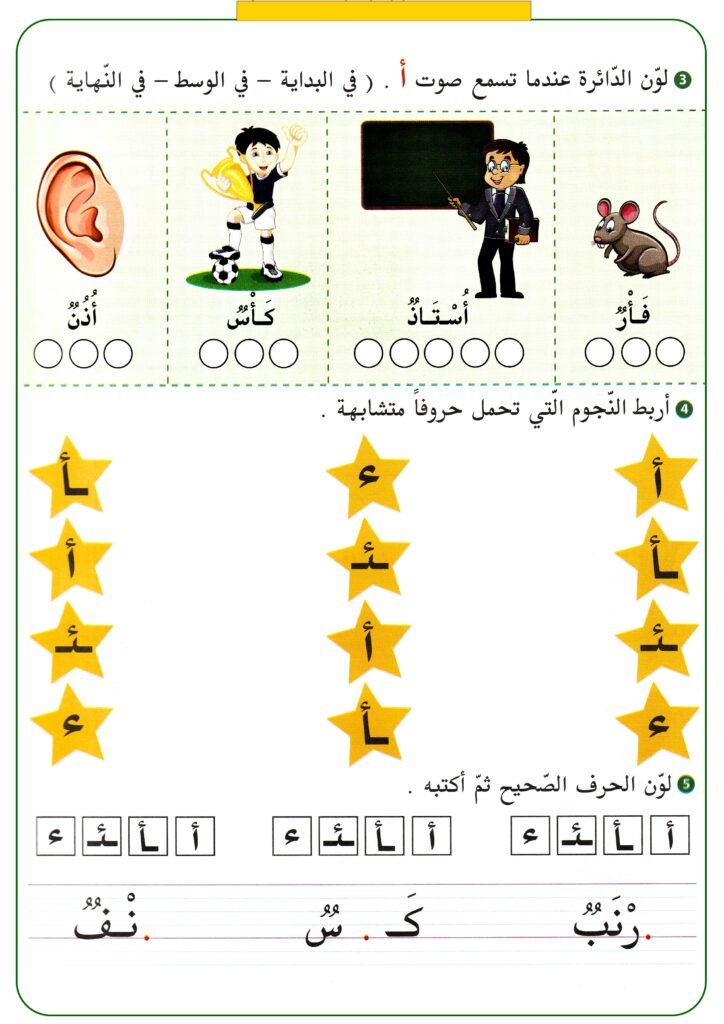
- Builds Auditory Phonemic Awareness: Prompts children to isolate target letter sounds within spoken vocabulary words—differentiating beginning, medial, and ending positions.
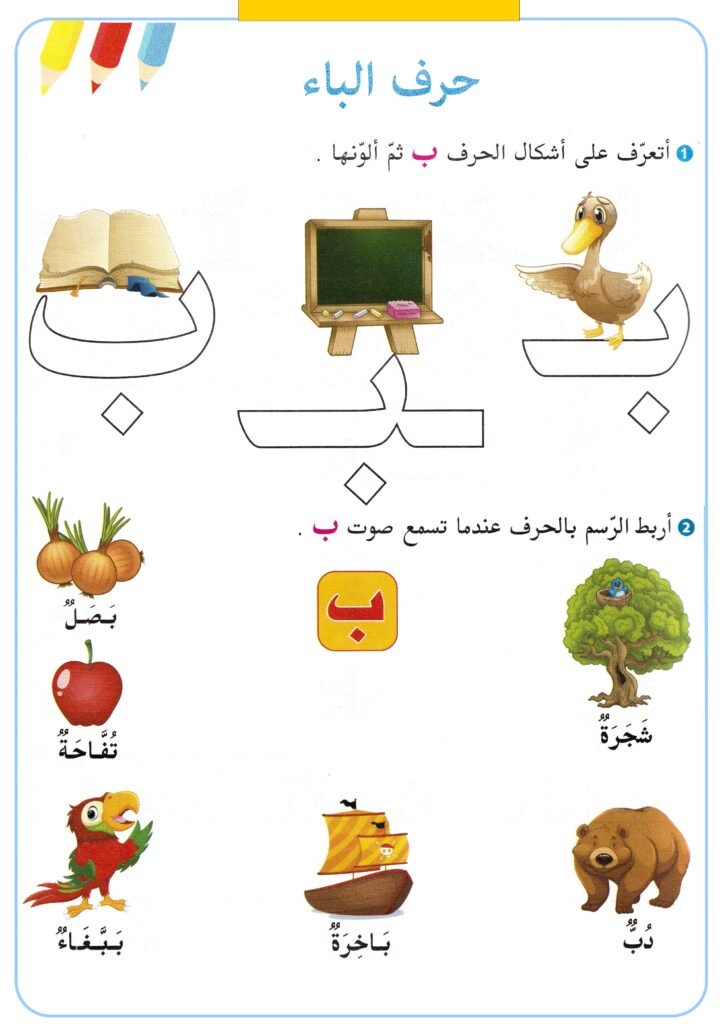
- Mastery Over Look-Alike Letter Families: Clearly distinguishes dot counts across structurally identical letter pairs, such as the Baa-Taa-Thaa family and the Jeem-Haa-Khaa trio.
- Teaches Positional Shape Variations: Displays initial, medial, and final cursive variations side-by-side through engaging visual matching games.
- Enhances Early Word Building: Features fill-in-the-blank vocabulary exercises where children select the appropriate letter form to complete missing words.
Inside This 15-Page Kids Worksheet Pack
Designed thoughtfully to balance playful discovery with structured foundational benchmarks, this printable booklet delivers comprehensive support:
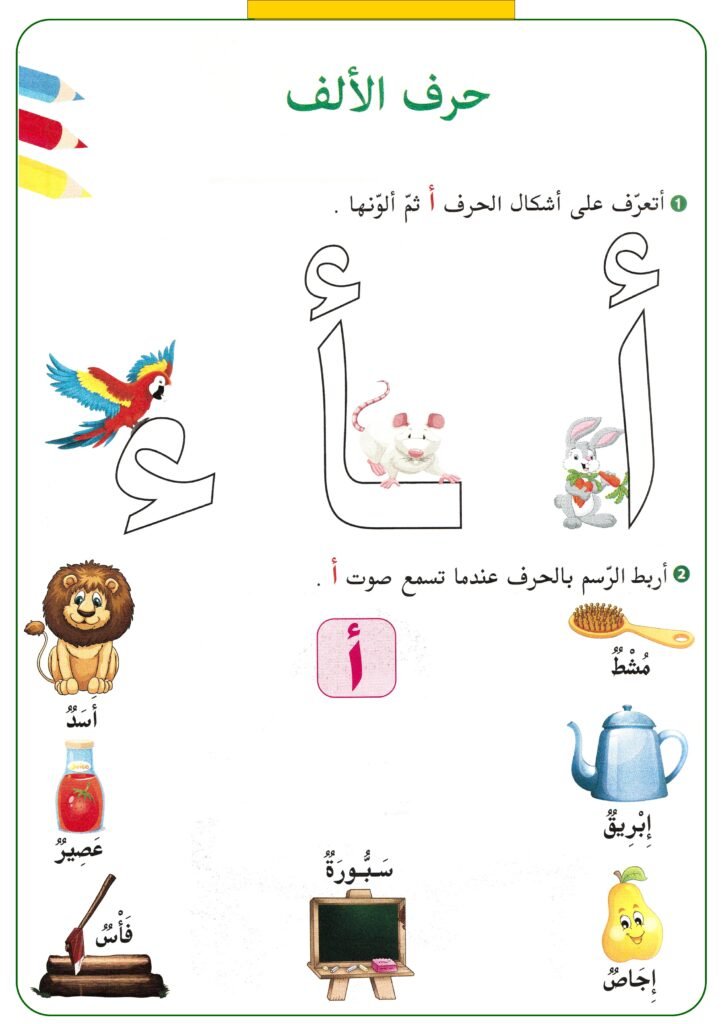
- Large Hollow Coloring Outlines: Bold letter outlines filled with whimsical miniature illustrations, ideal for crayon shading or finger tracing.
- Auditory Sound-Picture Rails: Curated vocabulary arrays surrounded by distractors, prompting kids to circle or link items sharing the target sound.
- Phonetic Position Marker Mats: Three-circle locator rails that children color to indicate whether a target sound rings at the start, middle, or end of a word.
- Ready-to-Print Classroom & Home PDF: An ink-conscious, zero-prep layout engineered for homeschool morning routines, daycare centers, or kindergarten literacy stations.
Practical Home Tips for Alphabet Worksheet Success
To make phonics practice a cheerful, confidence-building routine with your learner, try these creative parent tips:
- Say the Sound, Not Just the Name: Model the phonetic sound (e.g., “B” or “Ta”) while pointing to the character rather than just reciting its traditional alphabet name.
- The “Where is the Dot?” Touch Game: Place Baa, Taa, and Thaa side by side and have your child touch and count the dots before coloring each letter.
- The Slow-Motion Word Tap: Say a word like Asad (lion) or Khobz (bread) slowly, tapping a finger on the table to help kids identify where the letter sound sits.
Images from Arabic Alphabet Worksheets for Kids
Arabic Alphabet Worksheets for Kids: The Alif to Dhal Phonics Guide
For easy, free direct downloading, the memorandum was also displayed in PDF format. We presented this file to you from the kidslearningarabic blog If it indicated that there was an error. I hope you will leave that in the comments below.
Read also in Arabic: Arabic Alphabet Worksheets for Kids: The Alif to Dhal Phonics Guide