
Arabic connected and separate letters worksheets provide early learners with the golden key to unlocking smooth, natural Arabic cursive handwriting. For young beginners, one of the biggest puzzles is understanding why some letters hold hands with both neighbors while a specific group of “friendly rebels”—the six non-connecting letters (Alif, Daal, Dhaal, Raa, Zay, Waw)—proudly refuse to link forward. Without clear guidance, children often join letters that shouldn’t connect or leave unintentional gaps inside words.
Turning these cursive rules into clear, visual patterns replaces spelling confusion with effortless penmanship. Here is why practicing letter connection mechanics builds unstoppable early reading and writing confidence.
Why Practice with Arabic Connected and Separate Letters Worksheets?
Working regularly through Arabic connected and separate letters worksheets resolves primary handwriting hurdles and accelerates literacy growth:
- Eliminates Cursive Joining Errors: Clearly highlights which characters link on both sides and which six letters only shake hands from behind.
- Cultivates Natural Writing Rhythm: Teaches developing hands when to lift the pencil and when to glide smoothly along the baseline.
- Sharpens Visual Word Boundaries: Helps children instantly distinguish where one syllable ends and another begins within authentic words.
- Builds Rock-Solid Spelling Foundations: Prevents common early dictation mistakes by cementing standard connection rules in muscle memory.
Inside This Targeted Cursive Practice Booklet
Engineered to make handwriting mechanics intuitive and engaging, this printable learning set offers high-impact educational tools:
- Clear “Friendly Rebel” Highlight Sections: Dedicated visual spotlights for the six non-connecting letters to make their rules impossible to forget.
- Interactive Before-and-After Tracing Grids: Shows isolated letters alongside their joined forms so children grasp the structural transition clearly.
- Child-Friendly Visual Contrast: Large, well-spaced fonts and clear dotted paths ensure developing eyes stay relaxed and focused.
- Instant Ready-to-Print PDF: A zero-prep resource designed for homeschool desks, kindergarten literacy centers, or morning handwriting warm-ups.
Playful Home Strategies for Connection Rules
To turn cursive joining practice into a fun, hands-on game with your learner, try these practical ideas:
- The “High-Five” Rule: Teach your child that regular letters give high-fives with both hands, while the six rebel letters only give a high-five with their right arm.
- Traffic Light Highlighting: Use a green felt marker to highlight connecting arms and a red dot where a letter must stop and leave a clean space.
- Pencil-Lift Counting: Count aloud how many times the pencil lifts off the paper when writing a complete three-letter word.
Image from Arabic Connected and Separate Letters Worksheets
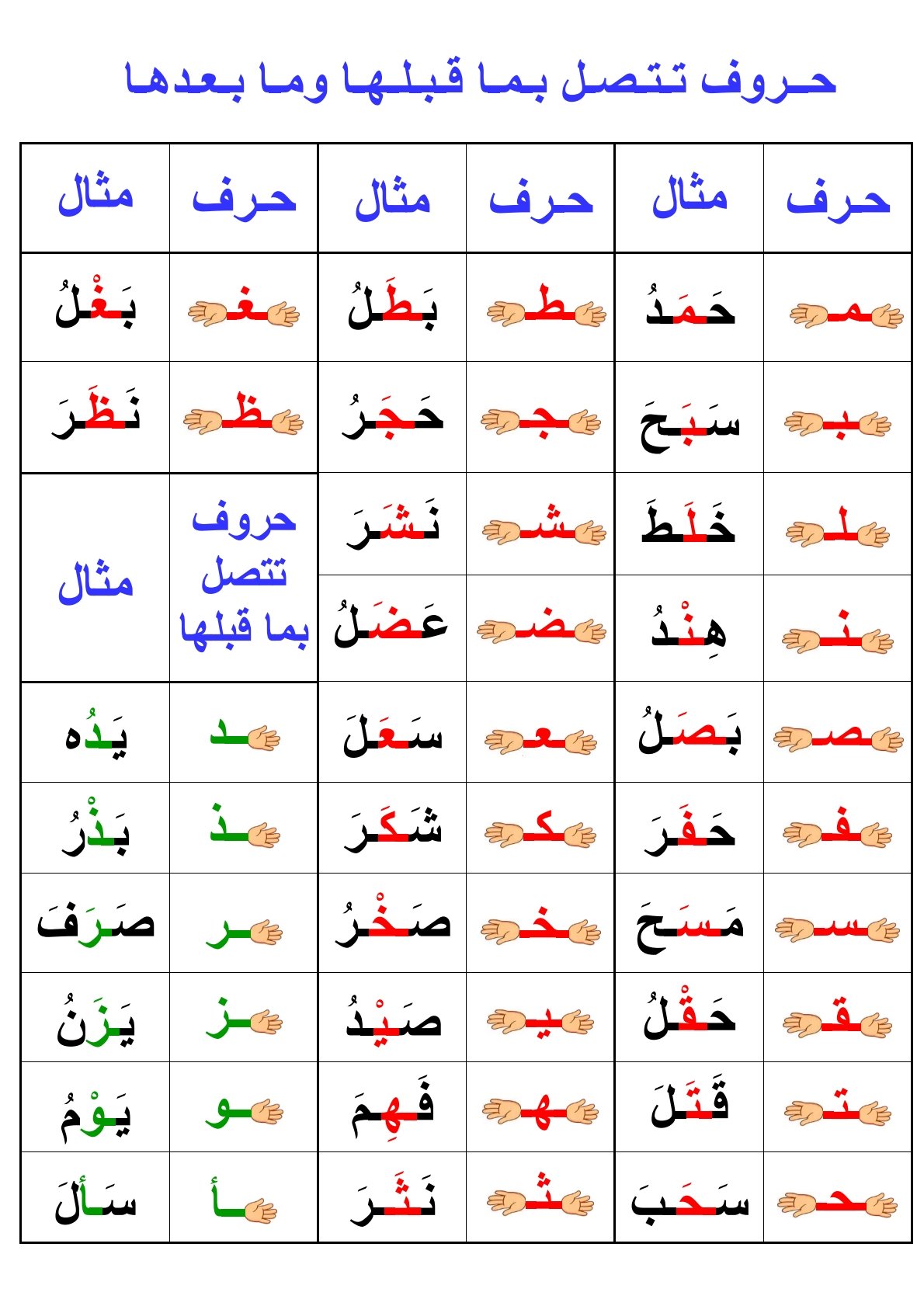
Arabic Connected and Separate Letters Worksheets: The Secret to Fluent Cursive
For easy, free direct downloading, the memorandum was also displayed in PDF format. We presented this file to you from the kidslearningarabic blog If it indicated that there was an error. I hope you will leave that in the comments below.
Read also in Arabic: Arabic Connected and Separate Letters Worksheets: The Secret to Fluent Cursive