
An Arabic reading fluency workbook for kids provides an indispensable, structured bridge connecting single-letter recognition with smooth word decoding and confident spelling. Beginning readers frequently struggle with halting, robotic phonics drills when trying to blend connected characters together. Prepared by educator Abdullah Al-Ghamdi, the focused printable booklet How I Read (Kayfa Aqra’) introduces a systematic decoding strategy built on three foundational reading pillars: scaffolded three-letter word blending, long-vowel sustained phonics (Mudood), and isolated consonant blends (Al-Maqta’ Al-Saakin). For young kids, this methodical step-by-step framework eliminates hesitations, replaces guesswork with phonemic logic, and integrates immediate dictation practice.
Connecting targeted phonetic chunking with real-time spelling tasks makes early reading intuitive and rewarding. Here is why this decoding booklet forms the ideal foundation for foundational Arabic reading fluency.
Why Choose an Arabic Reading Fluency Workbook for Kids?
Practicing regularly with an Arabic reading fluency workbook for kids delivers distinct cognitive and literacy advantages:
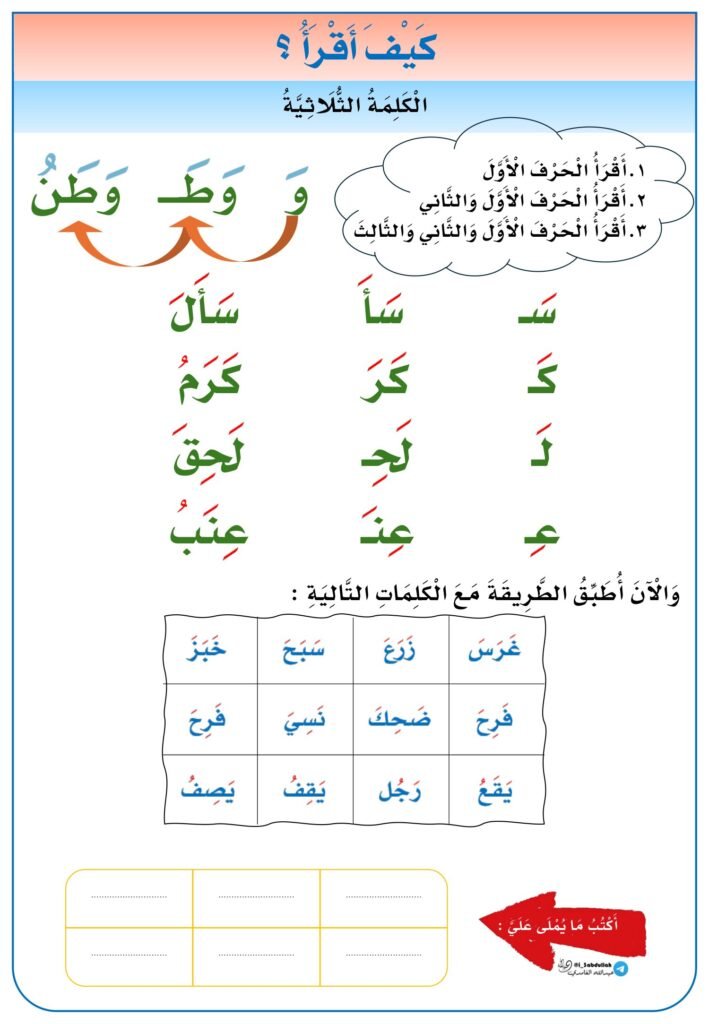
- Eliminates Stuttering Blends: Teaches a proven cumulative blending method—combining Letter 1 and Letter 2 before attaching Letter 3 (e.g., Fa + Ra = Fara -> Faraha).
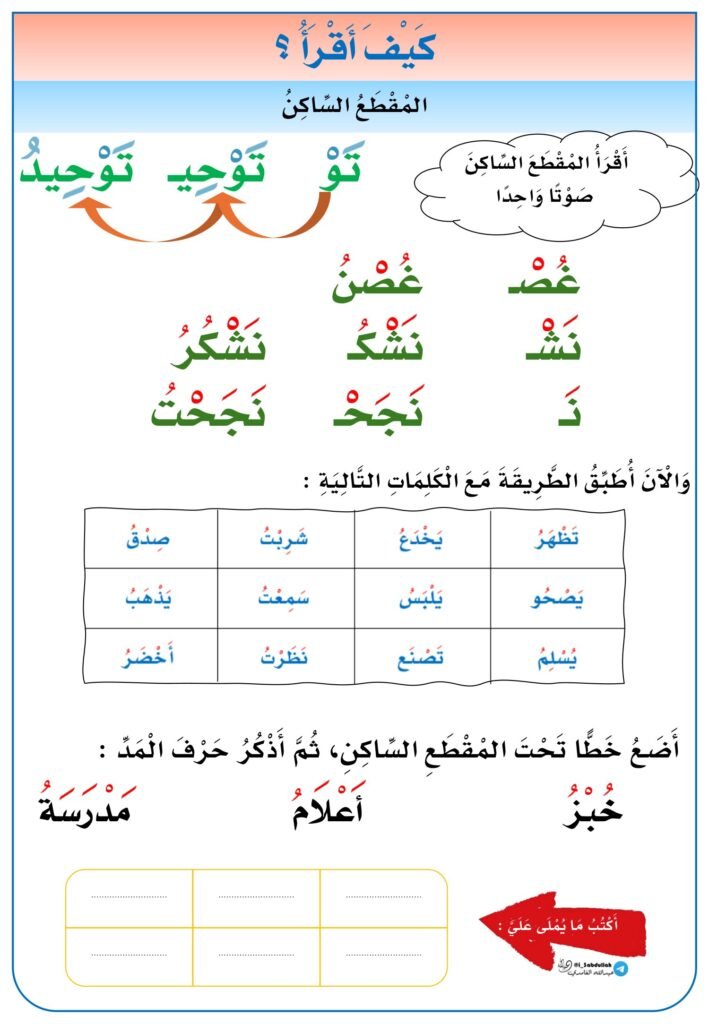
- Treats Vowel-Consonant Units: Demystifies resting consonant syllables (Sukun) by teaching children to vocalize the resting sound alongside its preceding vowel as one breath.
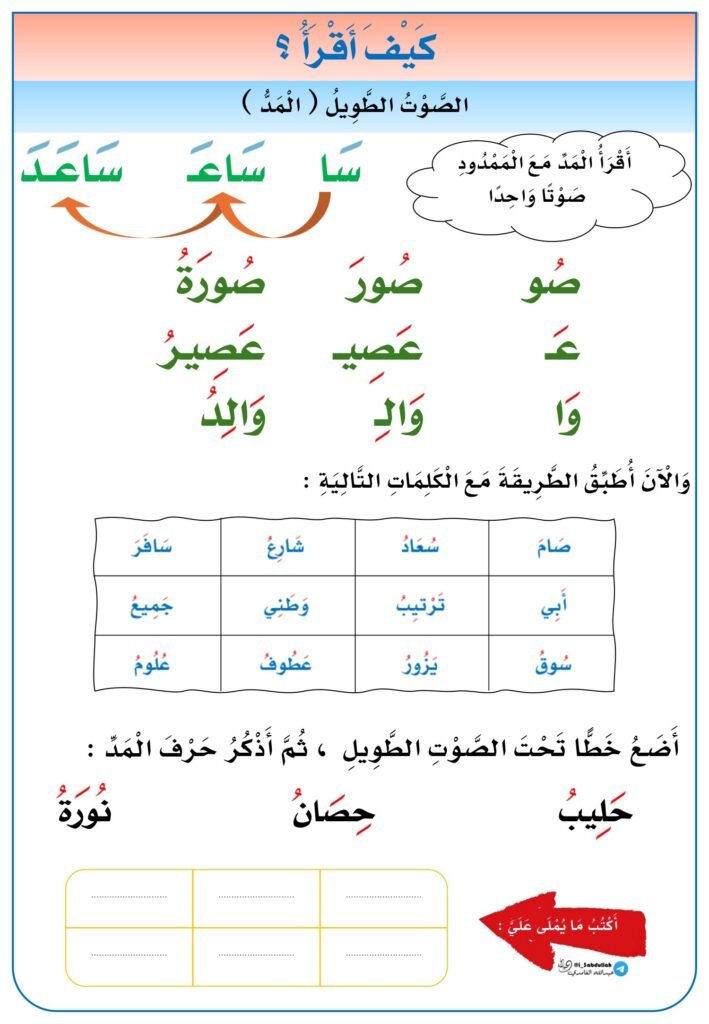
- Mastery Over Sustained Vowels: Trains kids to pronounce long-vowel letter combinations (Alif, Waaw, Yaa) as single extended sounds rather than disjointed syllables.
- Integrates Read-and-Spell Dictation: Features dedicated “Write What Is Dictated to Me” lines beneath every drill to immediately test visual retention.
Inside This Kids Phonics Mastery Pack
Designed thoughtfully to balance playful discovery with structured foundational benchmarks, this printable booklet delivers comprehensive support:
- Scaffolded Three-Letter Blending Tables: Fully vocalized CVC-style Arabic words (Zar’a, Gharasa, Fariha) organized with progressive blending steps.
- Long Vowel and Prolongation Modules: Targeted reading rails contrasting short vowels against extended long-vowel pairs (Sa’ada, Soorah, ‘Aseer).
- Resting Syllable (Sukun) Practice Grids: Explicit unit-sound boxes training fluid delivery of challenging resting clusters (Tawheed, Ghusn, Nashkur).
- Ready-to-Print Classroom & Home PDF: An ink-conscious, zero-prep layout engineered for kindergarten reading intervention, first-grade literacy centers, or homeschool spelling.
Practical Home Tips for Reading Fluency Success
To make decoding practice a cheerful, empowering routine with your learner, try these creative parent tips:
- The Two-Finger Reveal: Cover the third letter of a three-letter word with your finger, prompting your child to blend the first two letters before revealing the finale.
- The Long-Breath Stretch: When practicing long vowels, hold out a continuous breath sound to show kids that letters like Alif stretch the vowel naturally.
- Immediate Home Dictation: After reading a column, dictate two words directly into the bottom practice lines to reinforce muscle memory.
Download Your Free Kids Reading Fluency PDF
Equip young kids with effortless word-blending abilities, sharp phonemic decoding, and proud Arabic reading fluency. Download your free printable reading fluency guide today, practice the three-pillar decoding strategy together, and watch your child’s literacy blossom with confidence
Images from Arabic Reading Fluency Workbook for Kids
Arabic Reading Fluency Workbook for Kids: The “How I Read” Decoding Guide
For easy, free direct downloading, the memorandum was also displayed in PDF format. We presented this file to you from the kidslearningarabic blog If it indicated that there was an error. I hope you will leave that in the comments below.
Read also in Arabic: Arabic Reading Fluency Workbook for Kids: The “How I Read” Decoding Guide