
Teaching Arabic short vowels to kids is the golden key that unlocks real reading fluency and bridges the gap between naming letters and sounding out words. In Arabic, letters provide the skeleton of a word, but the short vowels—known as Al-Harakat Al-Qaseerah (Fatha, Damma, and Kasra)—give it life, voice, and meaning. When young learners discover how these tiny accent marks change the sound of every letter, decoding words transforms into an exciting phonetic adventure.
Whether you are introducing phonics to an eager preschooler, guiding kindergarten circle time, or homeschooling at your kitchen table, this friendly approach makes short vowels approachable, fun, and memorable.
Why Is Teaching Arabic Short Vowels to Kids Essential?
Without vowel marks, early readers often struggle to pronounce unfamiliar words accurately. Here is why teaching Arabic short vowels to kids forms the bedrock of early literacy:
- Phonetic Decoding: Empowers children to blend consonant and vowel sounds together to read simple three-letter words (CVC words) effortlessly.
- Accurate Pronunciation: Prevents common reading mistakes and trains children on classical Arabic vocalization (Fus’ha) from day one.
- Visual Mark Awareness: Teaches kids to spot whether a stroke sits proudly on top of a letter or rests gently underneath it.
- Meaning Discrimination: Helps children understand that changing a single mark shifts the meaning of a word entirely.
Meet the Three Short Vowels: Sounds, Shapes & Stories
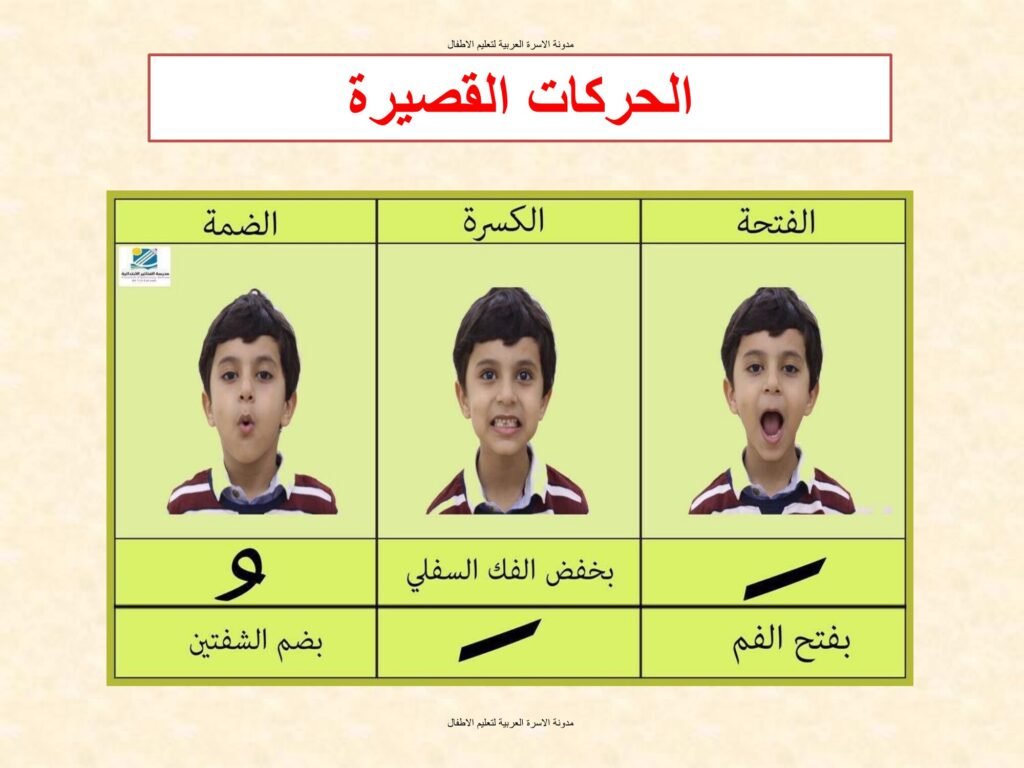
To help children remember each vowel effortlessly, pair each mark with a simple visual cue and mouth movement:
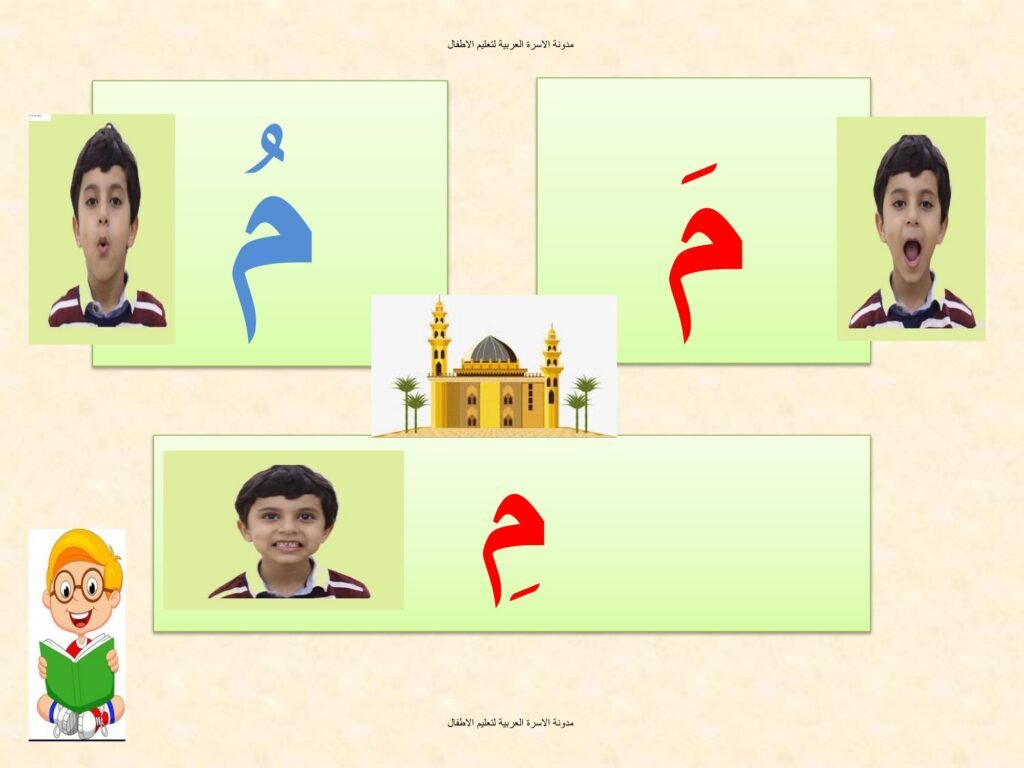
Al-Fatha (ـَ): The Happy Open Smile
- Shape: A small diagonal stroke sitting above the letter.
- Sound: A short, cheerful “aa” sound (as in “apple”).
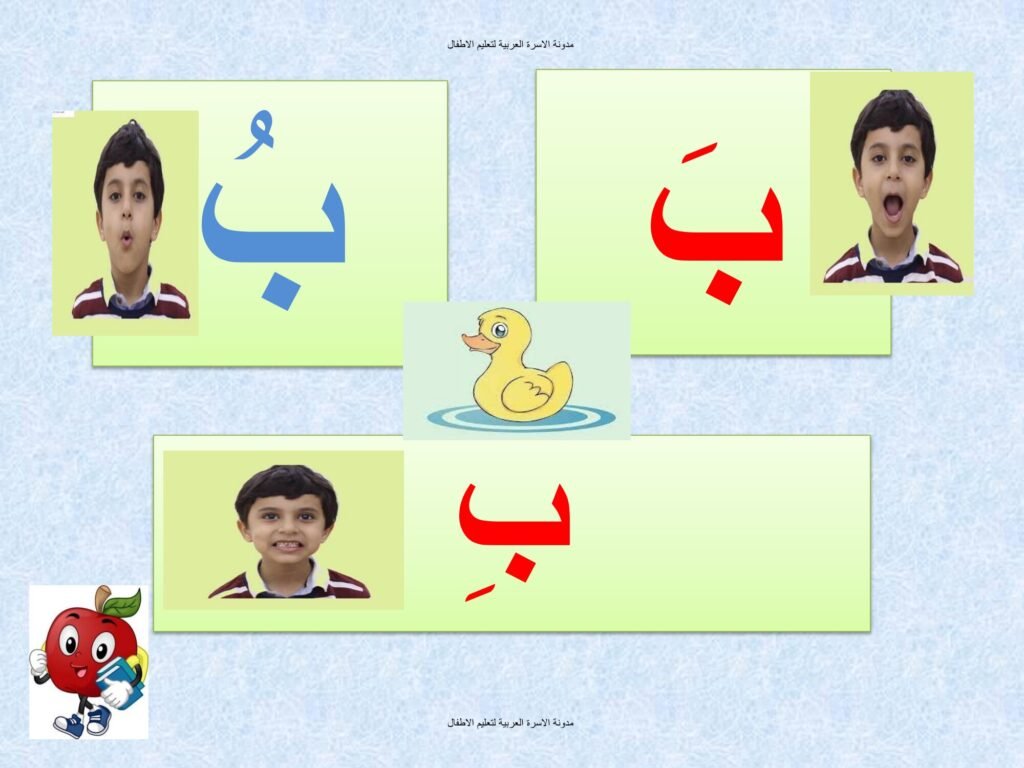
- Kid Tip: Tell your child that Fatha loves to smile, opening the mouth wide with joy: بَ (Ba) – تـَ (Ta) – سَ (Sa).
Al-Damma (ـُ): The Whistling Little Waw
- Shape: A tiny loop resembling a miniature letter Waw perched on top.
- Sound: A round, short “oo” sound (as in “look”).
- Kid Tip: Have your child purse their lips forward like blowing a tiny kiss or whistle: بُ (Bu) – تُ (Tu) – سُ (Su).
Al-Kasra (ـِ): The Gentle Chin Drop
- Shape: A neat diagonal stroke resting beneath the letter.
- Sound: A soft, short “ee” sound (as in “sit”).
- Kid Tip: Remind kids that Kasra sits down low, pulling the lower jaw gently down like a soft grin: بِ (Bi) – تِ (Ti) – سِ (Si).
Simple and Engaging Activities for Home and Classroom
Keep your learning sessions short, energetic, and playful with these low-prep ideas:
- The Mouth-Shape Mirror Game: Hand your child a small handheld mirror. Let them watch their own lips transform as they cycle through: Open (Fatha), Round (Damma), and Down (Kasra).
- Vowel Hopscotch: Draw three squares on the floor with chalk or painter’s tape representing Fatha, Damma, and Kasra. Call out a syllable (like Nu! or Fi!) and let your child jump onto the matching vowel spot.
- Playdough Marks: Roll small strips and loops of playdough to place above and below large laminated letter flashcards.
- The Sound Detective: Read a short, vocalized Arabic word aloud and ask: “Did my mouth open up for a Fatha or round up for a Damma?”
Download Your Free Arabic Short Vowels Printable Worksheets (PDF)
Ready to start teaching Arabic short vowels to kids with engaging printables? Click the direct download button below to get your complete set of colorful charts, tracing activities, and vowel flashcards. Print your sheets, grab some crayons, and watch your little reader take their first joyful steps into reading Arabic with ease
Images from Teaching Arabic Short Vowels to Kids
Teaching Arabic Short Vowels to Kids: The Complete Phonics & Fun Guide
For easy, free direct downloading, the memorandum was also displayed in PDF format. We presented this file to you from the kidslearningarabic blog If it indicated that there was an error. I hope you will leave that in the comments below.
Read also in Arabic: Teaching Arabic Short Vowels to Kids: The Complete Phonics & Fun Guide